 Generated with Grok
Oil and Light
Digital Art · Digital Painting · Drawing/Sketch · Fine Art
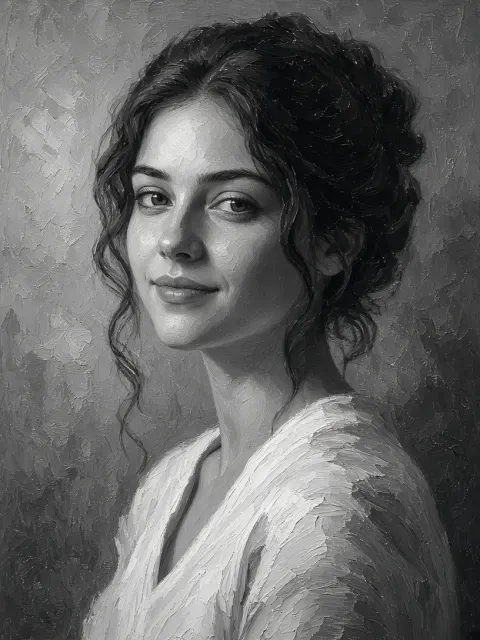
Create a highly detailed monochromatic bust portrait in a classical oil-painting style, rendered in black-and-white grayscale with rich impasto texture, visible painterly strokes, and subtle canvas grain. Use the attached reference image for facial structure and likeness accuracy. Preserve the subject’s facial proportions, jawline, cheekbone shape, eye shape, nose proportions, lip structure, and overall facial symmetry, translating skin details into carefully controlled painterly strokes. Frame the composition from the upper chest to the top of the head in a vertical portrait format. Turn the torso slightly away from the camera by approximately 20–30 degrees while turning the head back toward the viewer for a natural three-quarter angle. Keep the shoulders relaxed, the neck upright and balanced, and the gaze directed at the viewer. The expression is calm and gentle with a subtle closed-mouth smile. Paint natural eyes with subtle shadows beneath the lower eyelids and softly arched eyebrows. Add a small bright catchlight in the upper-left area of each iris, indicating a directional light source. Render thick, dark, wavy hair in a loose updo, with soft strands framing the face; create its volume with broad painterly strokes rather than individually defined strands. Use classic chiaroscuro lighting from the upper-left side of the frame. Illuminate the left side of the face while allowing the right side to fall into soft shadow, sculpting the facial structure with dramatic but natural tonal depth. Apply visible impasto oil texture throughout the composition: facial strokes should follow the natural contours of the face, while the hair and clothing use broader expressive strokes. Dress the subject in a simple white V-neck garment painted with loose white-gray brushwork, keeping the focus on the face. Set the portrait against an abstract textured gray oil-painted background with soft tonal variations and painterly strokes that separate the subject from the background. Maintain realistic classical brushwork, dramatic tonal contrast, monochrome values, and visible canvas texture. Do not add color, text, jewelry, or distracting background elements.