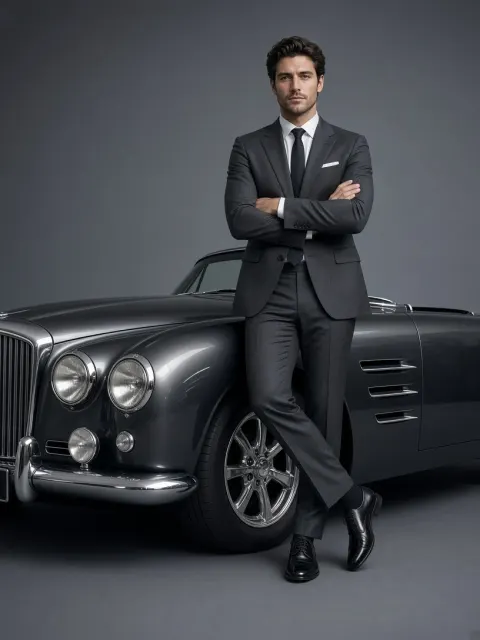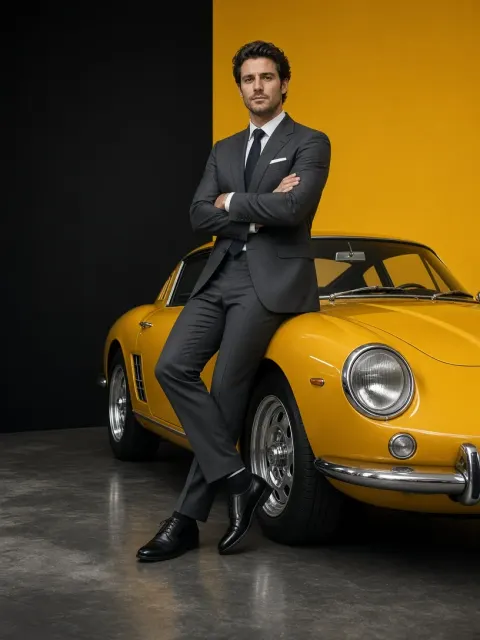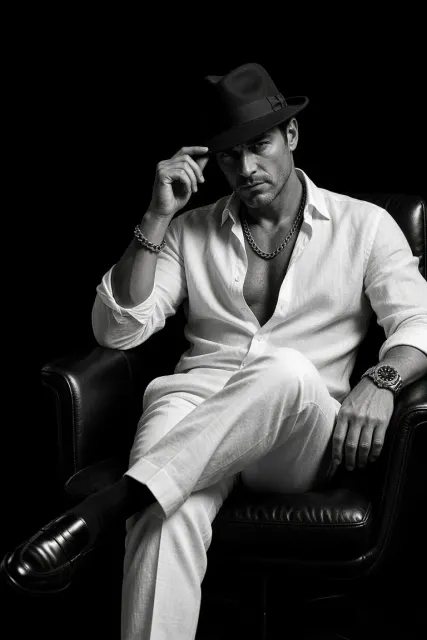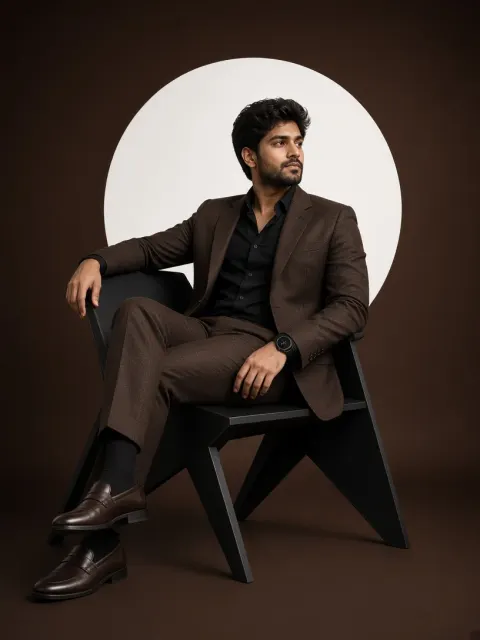
 Generated with Grok
The Golden Throne
Fashion & Editorial · Luxury · Old Money Aesthetic · Photography
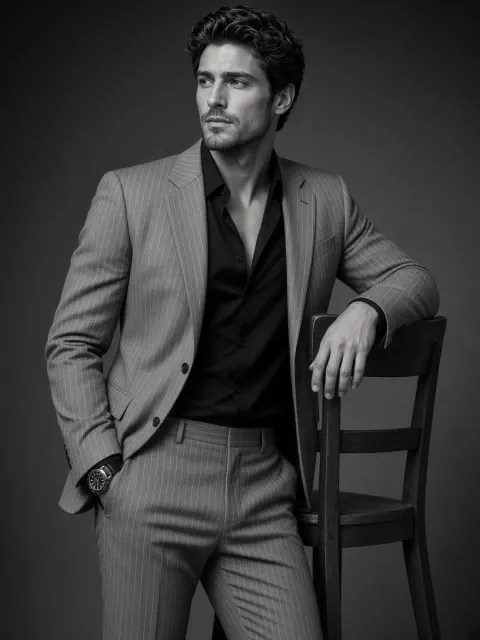
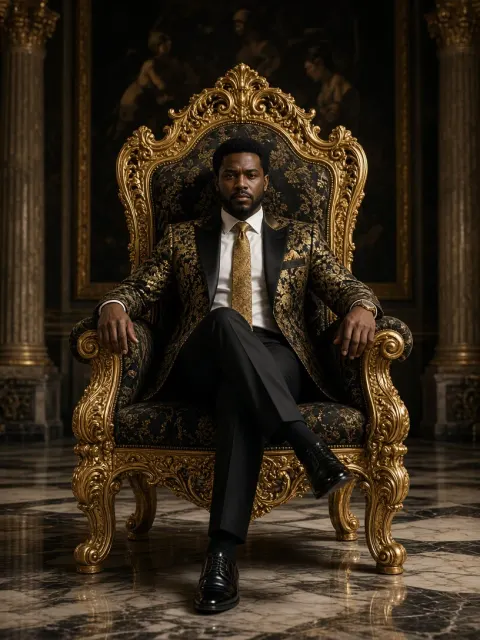
Use the uploaded image as a visual identity guide for the subject’s facial structure, proportions, skin tone, hairline, and overall appearance. Create a cinematic, photorealistic full-body portrait of a powerful, elegant man seated on a large ornate gold throne inside a grand palace interior. His face should closely match the reference in facial proportions, beard shape if present, jawline, eye spacing, nose structure, and overall identity. Frame him head to toe in a centered, symmetrical vertical composition. He wears an ornate blazer with a gold baroque pattern, a matching luxury gold tie, black satin lapels, a crisp white dress shirt, tailored black trousers, and polished black leather dress shoes. A subtle premium metal wristwatch is partially visible beneath one sleeve. He sits upright with straight posture, one leg crossed over the other, and both arms resting calmly on the throne’s armrests. His natural hairstyle, intense steady gaze, and calm, serious, controlled expression convey authority without aggression. The throne has a baroque gold-gilded frame with carved scrolls, acanthus leaves, floral motifs, a high rounded backrest framing the sitter, thick sculpted armrests, and curved cabriole legs. Its upholstery is dark brocade with a subtle floral texture, symbolizing power, wealth, and legacy. Set the scene in a grand palace interior with tall classical columns, a polished marble floor with soft reflections, and a large dark classical oil painting behind the throne, softly blurred. Create an atmosphere of old-world luxury with modern cinematic styling. Use dramatic cinematic lighting: a strong frontal key light with slight overhead direction on the subject, deep background shadows, and high-contrast chiaroscuro blending Renaissance oil-painting drama with modern luxury editorial photography. Use a palette of gold, black, deep charcoal, and warm highlights. Apply cinematic color grading, shallow depth of field, a 23mm lens perspective, sharp focus on the subject, and realistic skin, fabric, metal, wood, marble, and upholstery textures. Avoid smiling, casual clothing, modern casual settings, cluttered backgrounds, flat lighting, low contrast, pastel colors, cartoon or illustration styles, distorted facial features, altered identity, and playful or overly friendly moods.