Suggested canvas 3:4
Suggested model · Grok Imagine 2.0
English prompt
Full prompt
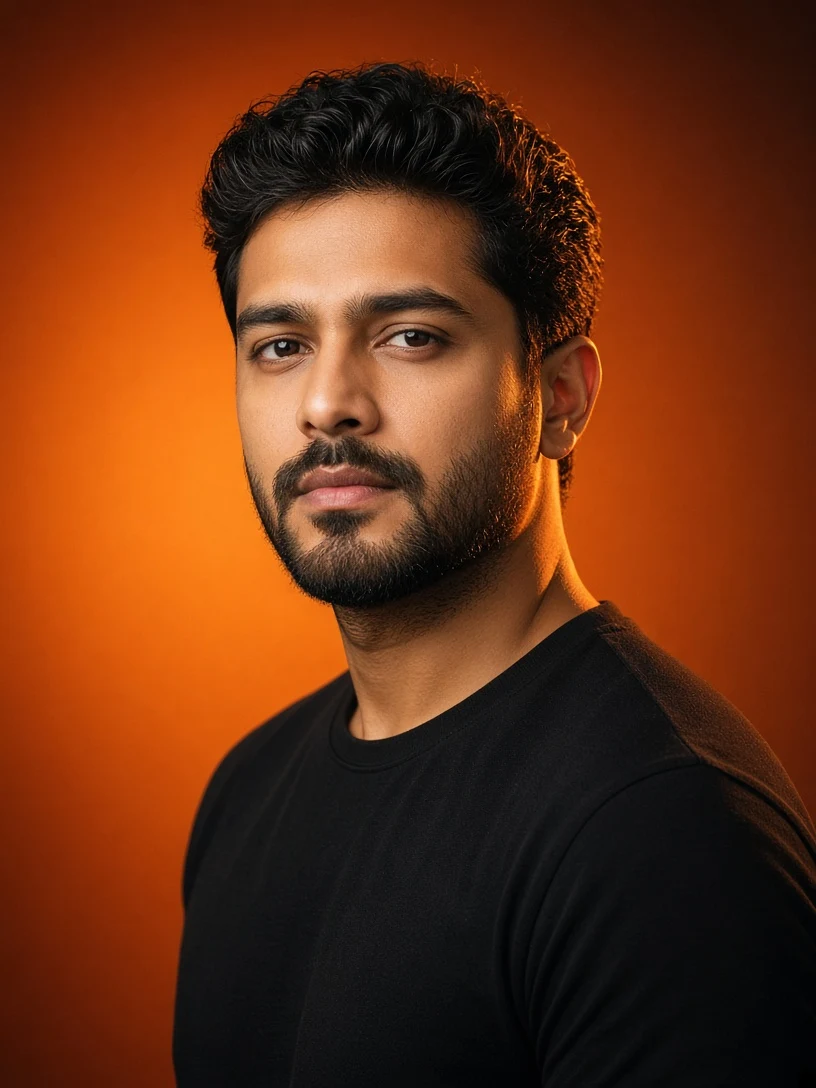
Create a high-end photographic studio portrait of a man matching the reference image, preserving his facial structure, beard density, hairstyle, skin tone, and proportions with faithful identity accuracy. Do not stylize or alter his appearance.
Capture him from the chest up in a vertical portrait composition, occupying most of the frame with a strong editorial presence. His body is turned slightly to the right by approximately 25–30 degrees, while his head rotates subtly back toward the camera for a natural three-quarter pose. He looks directly into the lens with a calm, confident, neutral expression. His shoulders are relaxed and his posture is upright and composed.
Use tight, balanced framing, with the head positioned slightly above center and both shoulders clearly visible. The subject fills approximately 70–80% of the frame, keeping visual focus on the face and upper body.
Use professional studio lighting: a soft, diffused key light from camera-left gently illuminates the face, preserving natural skin texture; a strong warm rim light from behind on the right creates a glowing orange edge along the hairline, ear, and shoulder; subtle shadow falloff on the opposite side of the face adds cinematic depth and dimension.
Set the portrait against a smooth, seamless studio backdrop with a rich orange gradient, transitioning from bright glowing orange near the subject to deep burnt orange and dark brown toward the edges. Keep the gradient soft and textureless for strong subject separation.
The subject wears a plain black T-shirt made of matte fabric, with minimal texture and no logos or distractions. The dark clothing contrasts sharply with the warm luminous background.
Style: modern editorial portrait photography, ultra-realistic, sharp focus on the eyes, visible natural pores without over-smoothing, cinematic contrast, warm color grading, shallow depth of field, and soft background blur. Maintain professional color accuracy and refined tonal balance. Avoid stylization, altered facial features, excessive retouching, logos, text, and distracting background elements.
AI Photography images and AI prompts, organized by subject and creative use.
Browsing and copying are free. Generation uses account credits with a quote before submission. Model, language and randomness affect output; exact reproduction is not guaranteed.
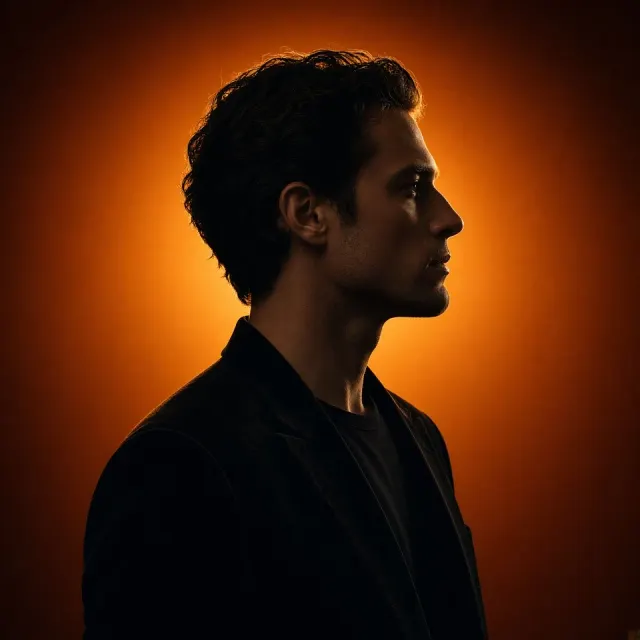
Create a hyper-realistic, high-fashion editorial studio portrait of a man in a clean right-facing side profile. His posture is upright, calm, and composed, with his head perfectly level to form a sharp, elegant silhouette. Preserve his natural facial structure without beautification or skin smoothing; retain realistic skin texture.
Outfit and styling: a tailored black velvet blazer over a dark minimalist crew-neck shirt. The fabric has a rich matte texture with subtle edge highlights. No logos or patterns.
Lighting — strict: use low-key chiaroscuro lighting. Place a strong directional key light at the rear three-quarter position, behind and slightly above the subject. Keep 70–80% of the face in shadow. Add a clean rim light outlining the hair, ear, jawline, and neck. Use only a very soft spill light to reveal minimal facial structure, such as the nose bridge and lips. No front lighting and no flat illumination. Maintain deep shadows with controlled detail and no overexposure.
Background — locked: use a seamless, vibrant amber-orange backdrop with a smooth radial gradient, brightest directly behind the head and gradually darkening toward the edges. Create a natural halo effect that enhances the silhouette without overpowering it.
Composition and framing: square 1:1 aspect ratio, medium bust framing from the lower chest to above the head, subject perfectly centered, occupying approximately 40–50% of the frame, with balanced negative space on both sides. Do not crop the subject.
Camera and detail: an 85mm lens look with shallow depth of field, approximately an f/1.8 feel. Keep the profile edge—nose, lips, and jawline—in ultra-sharp focus. Preserve natural skin texture. Use high dynamic range and deep contrast, with a clean image free of visible noise, artifacts, and artificial sharpening.
Rendering: photorealistic cinematic editorial photography with strong silhouette separation and a premium magazine finish.
Use the uploaded image only as a reference for the subject’s face and identity. Preserve the recognizable facial structure, natural hairstyle, and facial hair if present. Do not change the subject’s identity, age, gender, or facial proportions.
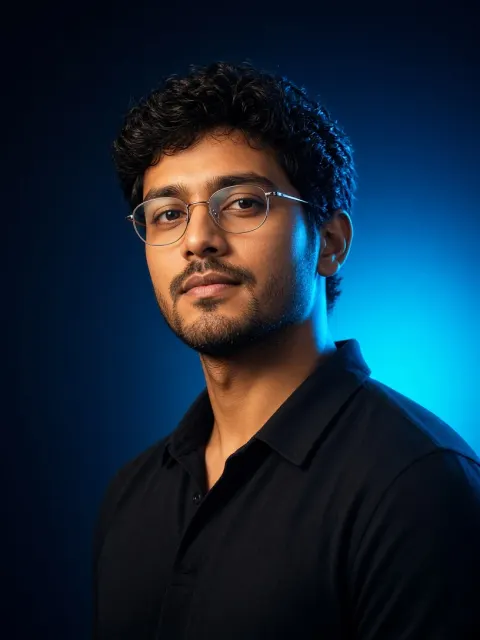
Create an ultra-realistic premium cinematic studio portrait in a vertical portrait composition, approximately 4:5.
Frame the subject from the lower chest upward, including both shoulders, the full hair shape, and a little space below the chest. Position the subject slightly lower in the frame with moderate, clean negative space above the hair; do not place the head too close to the upper edge. Keep the face slightly left of center, with the right shoulder extending naturally toward the lower-right area.
Angle the torso subtly toward image-right, with the head gently turned back toward the camera in a soft, natural three-quarter pose. Use a very subtle upward camera perspective from slightly below eye level. The subject looks directly into the lens with a calm, neutral, confident, professional expression: relaxed eyes, relaxed jaw, and naturally closed lips. Avoid a perfectly straight, flat, passport-photo-like pose.
Dress the subject in a plain black polo shirt with a soft matte finish, realistic fine fabric texture, natural folds, and a neat structured collar.
Add thin, delicate silver metal oval-round glasses with clear lenses, a narrow bridge, slim temples, and soft realistic reflections. Keep the glasses lightweight and refined; do not use oversized, thick, rectangular, or heavy frames.
Use a premium two-tone cinematic lighting setup. Place a large, very soft warm peach-golden key light on image-left and slightly toward the front, clearly illuminating the left forehead, left cheek, bridge of the nose, lips, and upper chest. The warm light should produce rich, healthy, natural skin tones.
Add a saturated electric cyan-blue rim light from image-right and slightly behind the subject, concentrated along the outer edge of the right hair, temple, ear, outer cheek, jawline, neck, and upper-right shoulder. Keep the cyan highlight vivid and defined without washing over the entire face or making the skin look teal.
Keep the central face, lower-right cheek, underside of the jaw, chin, neck, and polo collar in deeper soft shadow. Preserve strong warm-versus-cyan color separation, smooth contrast, realistic pores, natural skin imperfections, and soft cinematic shadow falloff. Avoid flat even lighting, desaturated or gray skin, broad cyan light across the face, or an ordinary neutral studio-headshot appearance.
Create a rich, high-saturation smooth studio gradient background. Keep the upper-left corner and far-left side deep midnight navy, nearly black-blue. Transition gradually through dark royal blue toward a luminous electric cyan-aqua glow behind the lower-right side of the subject.
Place the brightest cyan glow behind and slightly below the right side of the head, around the neck and shoulder area rather than directly behind the face. Let the cyan bloom softly outward, fading upward into deep petrol blue and dark navy. The background should feel polished, dimensional, vibrant, and cinematic, with a clean diagonal navy-to-electric-cyan gradient. Do not use a flat teal background, gray-green tones, weak saturation, foggy haze, or cyan spread evenly across the entire right side.
Photograph with an 85mm portrait lens from slightly below eye level, using shallow depth of field, crisp focus on the eyes, soft falloff toward the shoulders, premium editorial color grading, high dynamic range, realistic contrast, detailed skin texture, and a refined studio finish.
Avoid a perfectly frontal ID-photo pose, overly centered composition, head too high in the frame, weak background glow, flat teal background, dull colors, washed-out skin, harsh blue facial lighting, oversharpened or plastic-looking skin, smiling, exaggerated expressions, thick glasses, rectangular glasses, text, logos, or watermarks.
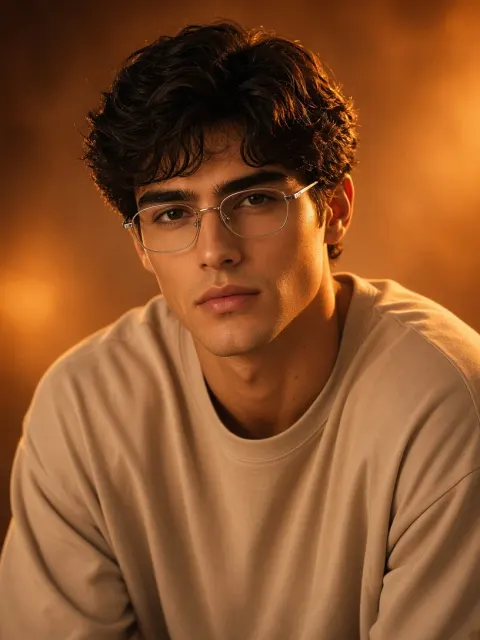
Create a hyper-realistic cinematic studio portrait of a young handsome man, using the uploaded photo only as a face reference to preserve the same facial identity, proportions, expression, and overall appearance. Keep the facial likeness highly accurate and natural; do not exaggerate or alter his identity. He has natural skin texture, sharp eyes, and wears slim silver metal oval-round glasses with clear lenses and slender temples.
Outfit: a minimal premium beige oversized T-shirt with realistic fabric folds and a soft cotton texture.
Pose: slightly leaning forward, making direct eye contact with the camera, with a relaxed, confident expression.
Lighting: warm cinematic orange studio lighting, with soft highlights across the face and a subtle amber rim light from the right outlining the hair and shoulders. Background: a blurred, glowing orange studio backdrop with soft bokeh, warm haze, rich contrast, and a premium editorial mood.
The skin should look natural, smooth, detailed, and realistic. Emphasize a high-end fashion portrait aesthetic, luxury atmosphere, ultra-sharp eyes, detailed hair strands, realistic reflections in the glasses, and refined cinematic color grading.
Camera style: 85mm portrait lens, f/1.8, close-up framing, cinematic depth of field, HDR, realistic skin texture, professional studio photography, premium editorial quality. Portrait orientation, 3:4 aspect ratio.
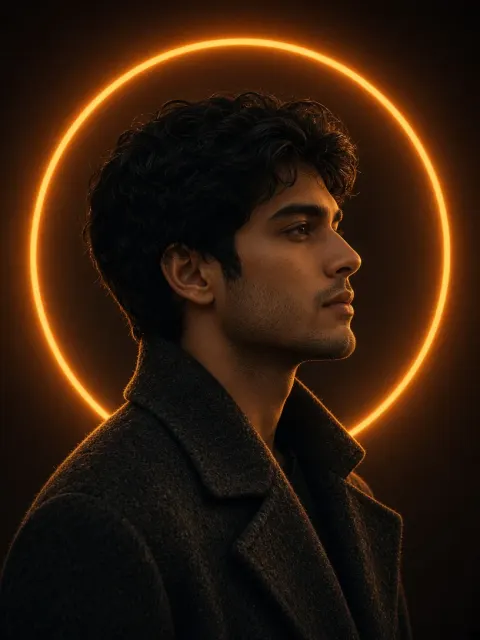
Use the uploaded image only as a reference for the subject's face and identity. A cinematic, high-fashion editorial portrait of the person wearing a dark, textured wool overcoat with a structured collar, styled in a minimal quiet-luxury aesthetic.
Pose and face direction: clean right-facing profile with the face turned slightly toward the camera by 5–10 degrees and the eyes directed off-camera, creating a subtle near-three-quarter profile while preserving a strong side-profile silhouette.
Expression: calm, composed, relaxed, introspective, and slightly warm while maintaining a serious editorial tone.
Composition and framing: vertical portrait composition, chest-up to above-head framing. Position the subject slightly left of center, occupying approximately 60% of the frame. Place a perfect circular neon ring directly behind the head to create a halo effect. Do not crop the hair, face, or chin; maintain clean headroom and balanced negative space.
Lighting: a single dominant warm neon ring light behind the subject, glowing golden orange. Strong rim lighting outlines the hair, jawline, and shoulders. Keep the face partially in shadow with soft, controlled low-key illumination. Use subtle bounce light to reveal facial features without flattening contrast. Maintain realistic light falloff and depth with no overexposure.
Background: dark, seamless studio background with a soft gradient in deep brown and black tones. Let the warm orange glow from the neon ring subtly bleed into the background. No distractions, objects, or text.
Mood and style: minimalist, cinematic, dramatic, and introspective, with strong chiaroscuro-inspired contrast between light and shadow. Premium editorial styling that feels clean and powerful.
Camera and technical details: high-end mirrorless camera such as a Sony A7R IV or Canon EOS R5, 85mm prime lens at f/1.8, shallow depth of field, crisp focus on the eye and facial plane, high dynamic range, ultra-realistic textures, natural skin detail, no artificial smoothing, and no noise artifacts.
Output constraints: no extra people, props, logos, or watermark. Keep the color palette warm golden orange without unwanted color shifts. Maintain sharp detail and natural realism.
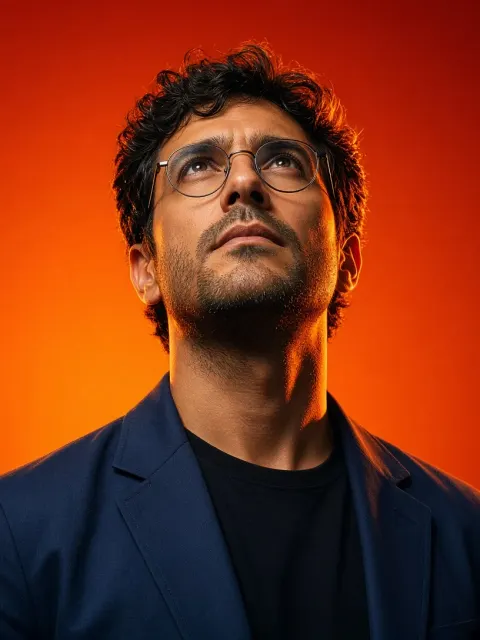
A powerful editorial, highly detailed, photorealistic, dynamic low-angle portrait of a man against a vibrant solid orange-red background, using dramatic, high-contrast studio lighting dominated by vivid orange and deep red hues. The subject is photographed from a slightly low camera angle, creating a strong, authoritative presence and emphasizing his jawline and facial structure. His head is subtly tilted downward toward the camera while his eyes look slightly upward into the space above, producing an intense, contemplative expression with strong visual tension.
He wears round metal glasses with soft studio reflections and controlled highlights on the lenses that do not obscure his eyes, enhancing realism and depth. His gaze maintains strong, focused eye contact just above the viewer’s perspective, reinforcing a confident and serious mood. He has a natural hairstyle, a composed facial expression, and wears a dark blue jacket over a black T-shirt, keeping the wardrobe minimal and editorial.
Directional studio lighting creates deep, sculpted shadows across one side of his face, while a strong warm rim light or colored edge light outlines his head and shoulders, separating him from the intensely lit background. The lighting transitions smoothly across the orange-red gradient backdrop, creating a cinematic atmosphere. Use a low-angle medium close-up composition focused on the face and shoulders, with sharp facial detail, natural skin texture, and clean contrast against the smooth, saturated color gradients. Portrait framing, 3:4 aspect ratio.
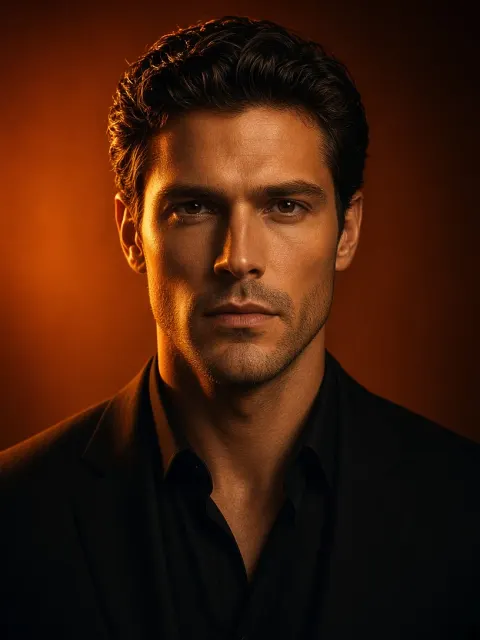
Create a photorealistic cinematic studio portrait of a handsome man in a centered, straight-on close-up from the chest up. He has neatly styled hair and a calm, serious, confident, composed expression, with direct eye contact toward the camera. Preserve realistic facial proportions, natural skin texture, subtle pores, authentic hair strands, and natural imperfections.
He wears a black dress shirt beneath a tailored black blazer, creating a sophisticated luxury editorial appearance.
Use dramatic warm cinematic lighting: a strong amber-orange key light from the left illuminates the left side of his face and creates a golden rim light along his hair, cheek, and ear. The opposite side falls into deep, soft shadow, producing a high-contrast chiaroscuro effect while retaining facial detail.
Set him against a smooth, seamless dark burnt-orange and brown studio background with a subtle gradient, soft atmospheric falloff, and a premium, moody cinematic ambiance.
Use an eye-level camera, perfectly centered and symmetrical framing, direct-facing pose, shallow depth of field, and a softly blurred background. Simulate an 85mm portrait lens at approximately f/1.8 with realistic optical rendering, natural perspective, and sharp focus on the eyes and facial features. Apply cinematic color grading, soft highlight roll-off, and professional luxury fashion photography styling. Avoid a CGI appearance, plastic skin, excessive retouching, text, and watermarks.