Browse and download free photo restyle AI images and pictures. Copy the full image generator prompts, view model and aspect ratio settings, or create your own in Picshik.
9 images with English prompts · Free image downloads and prompt copies · No sign-in needed
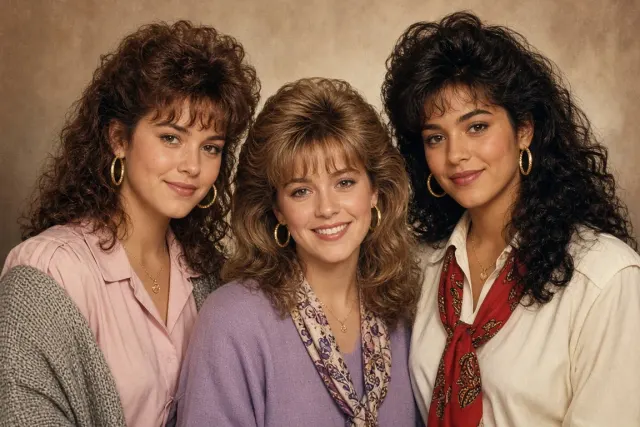
Use the uploaded photo as the identity reference for all people. Ignore the original pose, clothing, hairstyles, framing, and background. Recreate the people as recognizable best friends standing together in an authentic 1980s vintage studio photoshoot. Dress them in period-appropriate 1980s fashion with era-accurate hairstyles, while preserving each person’s facial identity. Use warm analog colors, subtle film grain, soft vintage studio lighting, natural expressions, and the look of a real 1980s photograph.
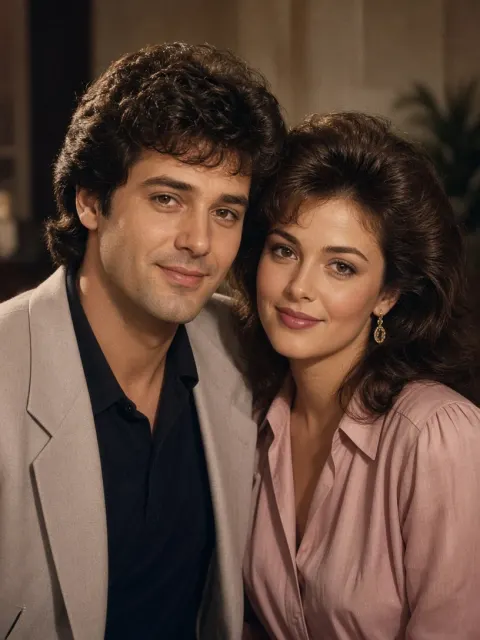
Use the uploaded photo as the identity reference for both people. Recreate them as a stylish 1980s couple while keeping both faces clearly recognizable. Give them authentic 1980s hairstyles and fashion, with natural coordinated styling and a relaxed couple-portrait pose. Make the image feel like a genuine vintage photograph, with warm analog colors, subtle film grain, soft nostalgic lighting, and an authentic 1980s atmosphere.
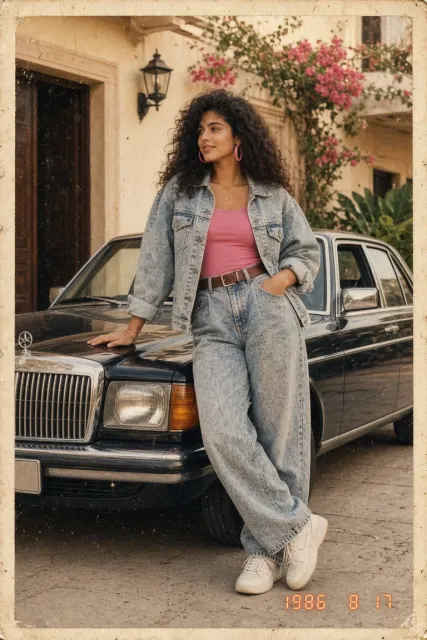
Using the uploaded photo for facial identity only, ignore its original pose, clothing, hairstyle, framing, and background. Recreate the person as a stylish young woman in an authentic mid-1980s photograph. Keep her face recognizable and natural. Create a vertical near-full-body portrait outdoors: she is casually leaning against the front corner of a vintage black European luxury sedan, with one hand resting naturally on the hood and the other tucked into her jeans pocket, legs loosely crossed at the ankles, and a relaxed posture. Her head is turned toward the left, with a subtle smile. Give her thick, long, voluminous curly 1980s hair. She wears an oversized light acid-wash denim jacket with rolled sleeves over a fitted bright pink top, tucked into very high-waisted, loose acid-wash blue jeans with a brown leather belt and white retro sneakers. Add large pink hoop earrings, a delicate necklace, and subtle bracelets. Feature the car's chrome grille, hood ornament, and rectangular headlight prominently. Set the scene outside a warm cream-colored residential villa with a dark wooden doorway, vintage wall lantern, tropical greenery, and pink bougainvillea. Use warm late-afternoon natural daylight, soft golden highlights, faded analog colors, gentle contrast, fine 35mm film grain, subtle haze, and slight softness. Add aged scanned-print texture, dust, scratches, heavily worn cream-colored photo edges, and a small orange-red 1986 date stamp in the lower corner. The result should feel like an authentic amateur 1980s photograph, not a modern cinematic or retro-filtered photoshoot.
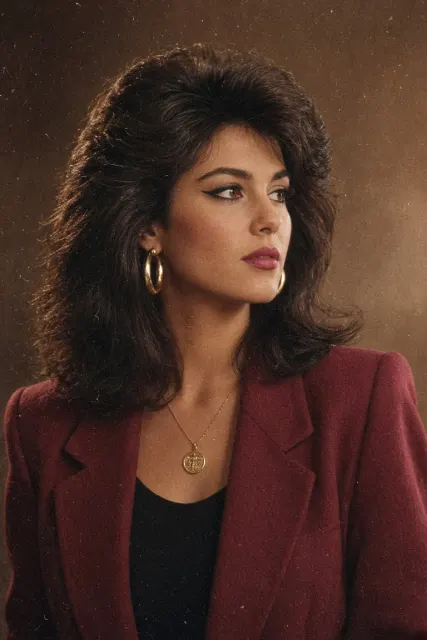
Use the uploaded image as the face reference. Create an ultra-realistic 1980s vintage portrait of the same woman, framed from the chest up in a confident three-quarter profile while she looks to the side. Give her voluminous feathered hair, bold gold hoop earrings, soft winged eyeliner, and muted berry lipstick. She wears a deep pink-red oversized blazer with padded shoulders over a black top, finished with a vintage pendant necklace. Use warm cinematic lighting, 35mm analog film character, gentle soft focus, faded colors, subtle natural film grain, and authentic dust and scratch marks for a nostalgic 1980s photographic look.
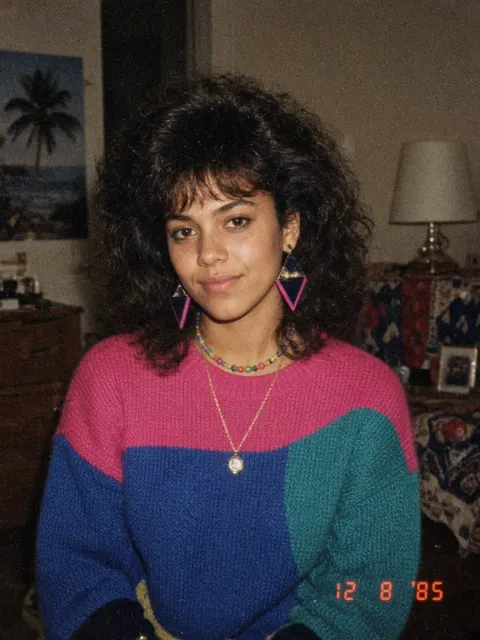
Using my uploaded photo as the reference, show what I would have looked like around 1985 while preserving my identity, facial features, skin tone, age, and recognizable appearance. Restyle my hair, clothing, accessories, and surroundings with unmistakable mid-1980s fashion: expressive silhouettes, statement accessories, layered details, distinctive colors, and period-accurate textures. Make the result feel like a genuine 1985 photograph, with analog film grain, faded color, direct flash, subtle softness, and natural vintage imperfections. Add a period-accurate red-orange 1980s date stamp in the lower corner. Exclude modern objects and any modern text.
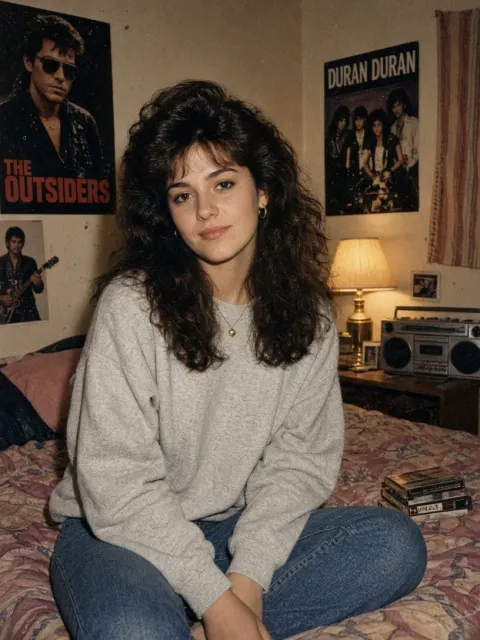
Using the uploaded photo as the identity reference, recreate the person as they might have looked in the 1980s. Keep their facial identity recognizable and realistic, with an authentic voluminous 1980s hairstyle and era-appropriate casual fashion. Place them in a cozy retro 1980s bedroom featuring vintage posters, a boombox or cassette player, warm lamp lighting, and subtle period details. Use warm analog colors, soft on-camera flash, fine film grain, slightly faded tones, and a worn vintage photo-print texture. The result should look like a genuine candid 1980s photograph, not a modern image with a retro filter.
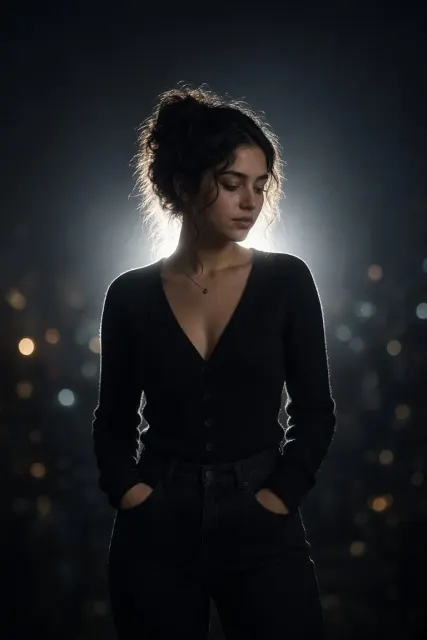
Use the uploaded image as the main base image. Preserve the subject’s original pose, framing, composition, camera angle, crop, body position, hand placement, facial identity, hairstyle, clothing, accessories, and overall subject details. Do not change the pose or expression. Only transform the lighting, background mood, and atmosphere.
Convert the scene into a dark, moody nighttime portrait with a deep muted background fading into near-black shadows. Replace the original background with a soft, out-of-focus night environment featuring faint silhouettes, subtle bokeh lights, and cinematic dusk-to-night tones. Add a strong backlight directly behind the subject to create a bright white rim light around the hair, shoulders, arms, hands, clothing edges, and full body outline. Add a soft luminous bloom aura around the subject, especially along the outer edges, creating a dreamy glowing silhouette effect. The glow should feel natural, atmospheric, and cinematic rather than artificial or neon.
Keep the subject clearly visible while allowing the background to remain dark and subdued. Maintain realistic skin texture, clothing texture, and natural facial features. Create the look of an ultra-realistic editorial night portrait captured with an 85mm DSLR lens, soft flash diffusion, shallow depth of field, subtle halation, bloom glow, gentle flash-lit contrast, and a dreamy low-light atmosphere. Use cinematic rim light, a glowing body aura, dreamy silhouette glow, a moody night portrait aesthetic, a dusk bokeh background, a CCD camera aesthetic, disposable-flash mood, and Instagram lo-fi night tones. Avoid changing the subject’s identity, pose, expression, framing, or proportions.
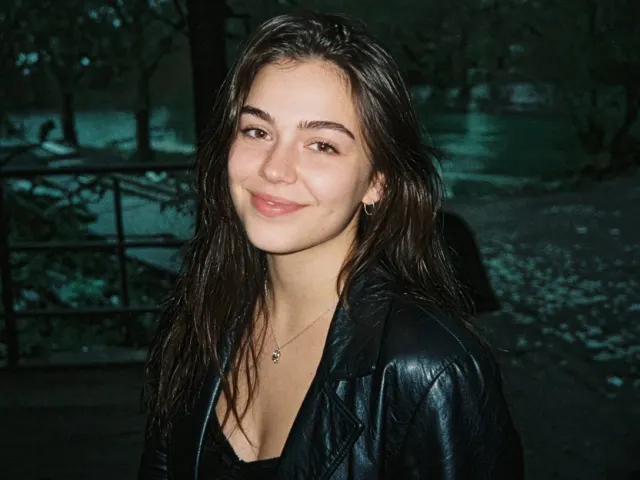
Apply only an Instagram Flash filter-style effect to the uploaded image. Do not regenerate, redesign, crop, reframe, beautify, retouch, or change any content. Preserve the exact same person, face, expression, pose, outfit, hairstyle, objects, background, framing, and composition. Change only the filter treatment: night conversion, direct flash behavior, color grading, visible noise, and film grain.
Convert the image into a darker, night-like low-light version of the same scene. Make the environment cooler, moodier, and richer, with a strong green-cyan/teal ambience and deeper night density, while keeping the original scene recognizable. The background should become darker and cooler than the subject without becoming muddy or fully black.
Light the subject with a strong, clearly visible direct on-camera frontal flash. The flash should dominate the subject more than the ambient light. The face, skin, hair, and clothing facing the camera should appear brighter, flatter, more directly flash-lit, and slightly lifted in exposure. The subject should look more illuminated and separated from the surroundings, like a real camera-flash snapshot rather than a softly relit portrait. Keep the skin warm, bright, glowing, and flash-washed while the surroundings remain cooler and darker.
If reflective, glossy, metallic, leather, glass, polished, or shiny surfaces are present, show realistic small flash reflections and specular pops where appropriate. If the scene geometry naturally allows it, include a believable subtle hard-edged flash shadow behind the subject or nearby objects, only where it would occur naturally.
Match the overall look of a rich Instagram Flash-style photo: a stronger night mood, cooler green-cyan ambience, a brighter flash-lit subject, slightly punchier contrast, and a clearly filtered appearance. Add visible digital noise and fine 35mm color-negative film grain across the entire image, especially in darker areas, smooth surfaces, and the background. If the original image already contains noise or compression texture, do not clean it up; blend it naturally into the overall grain structure.
The final result should look like the same original photo captured at night with a strong direct camera flash, featuring richer green-cyan ambience, a more obviously flash-lit subject, visible film grain, visible noise, and an Instagram Flash-style treatment.
Avoid soft studio lighting, weak subject flash, polished portrait lighting, aggressive denoising, overly neutral colors, dull flat skin, muddy blacks, or any change to the image content.
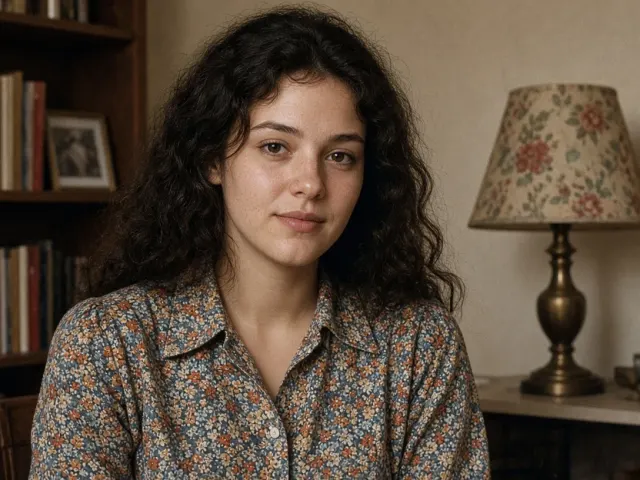
Restore the source photograph while strictly preserving facial geometry, body proportions, identity, original aspect ratio, framing, semantic positioning, and all existing objects. Target identity similarity ≥ 0.95. Reconstruct natural macro epidermal texture, visible skin pores, textile weaves, and era-specific surface details; avoid "plastic" smoothing.
First assess whether the source is real, synthetic, or ambiguous, and estimate overall damage on a 0–100 scale with regional confidence (RC). For RC ≥ 70, use context-guided high-detail reconstruction. For RC 30–69, perform coarse-to-medium structural restoration with zero semantic invention. For RC < 30, use only era-consistent silhouette and texture filling. Apply area-based reconstruction constraints: under 10% damage uses guided inpainting, 10–40% uses structural geometry synthesis, and over 40% uses a texture-only pass. Never invent, remove, or alter meaningful objects or identifying marks.
Maintain rigorous vanishing-point alignment, scale, geometric continuity, and physical plausibility. Validate reconstructed areas against surrounding geometry and revert to "Safe Fill" if the physics check fails. Restore chiaroscuro-level lighting depth while preserving the original shadow direction and luminance gradients. Reconstruct physically accurate material reflectance, including appropriate specular highlights and matte finishes.
Recover faded colors with an era-appropriate palette and controlled HDR tonal range, retaining vintage warmth, analog character, and spectral color fidelity. Apply sub-pixel deconvolution, motion-blur neutralization, chromatic-aberration correction, and multi-stage 4x-or-greater super-resolution with anti-artifact refinement. Separate sensor noise from compression artifacts, remove degradational "noise.", and preserve the original analog grain structure. Preserve metadata and EXIF information when possible. Intended output: lossless 16-bit PNG or TIFF in archival and sRGB color spaces, with no watermarks, logos, or altered identifying marks.

 Generated with Grok